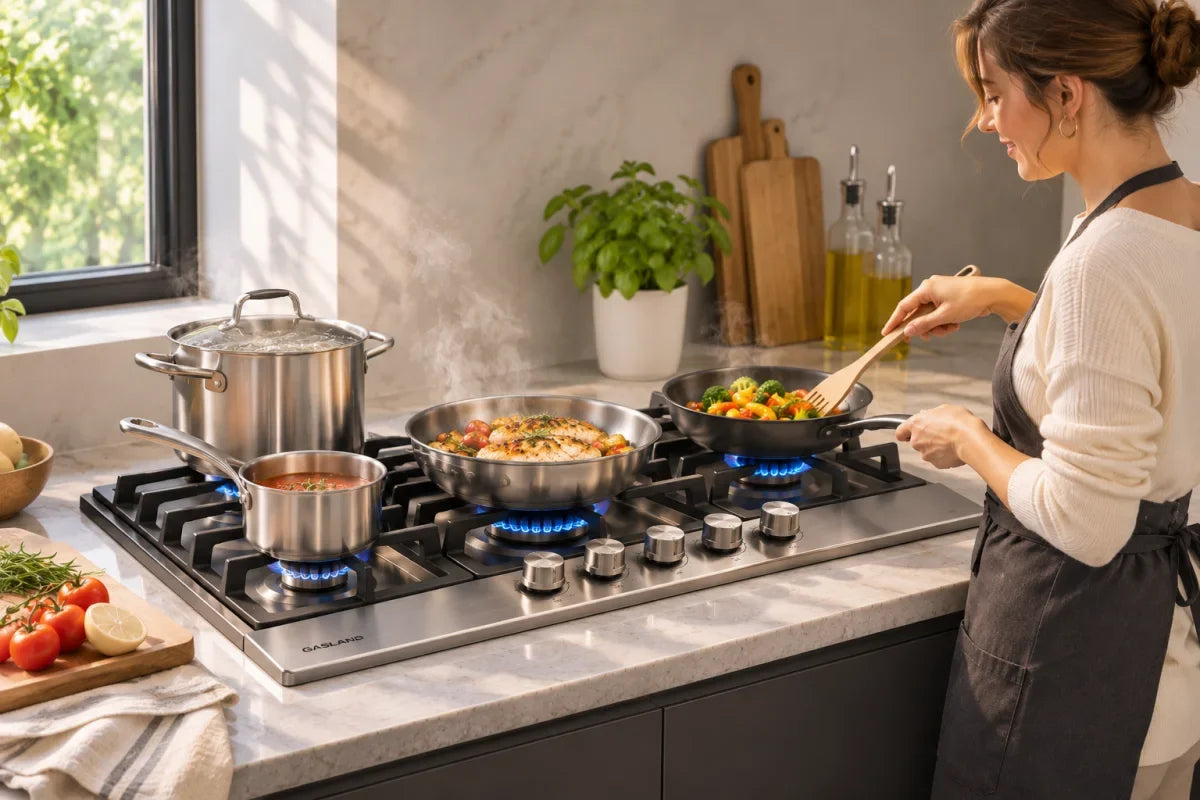



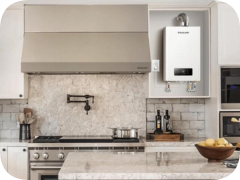



For many home cooks, the appeal of a gas cooktop goes beyond cooking performance. It's about keeping the cookware they love, adjusting heat without navigating digital controls, managing household expenses, and preparing familiar dishes the way they've always enjoyed them.
While induction offers excellent energy efficiency and rapid heating, there are still practical reasons why people prefer cooking with gas.
01. Lower Costs, Beyond the Initial Purchase
Replacing an existing gas cooktop can be an economical choice, especially when your kitchen already has a gas connection.
In the U.S., natural gas generally costs less than electricity per equivalent unit of energy. However, fuel prices alone don't determine cooking costs — energy efficiency matters, too.
Sources: U.S. EIA – Electricity Prices , Natural Gas Prices ; ENERGY STAR .
While natural gas generally costs less per equivalent unit of energy, actual cooking costs depend on local utility rates and appliance efficiency.
For households considering a switch to induction, there are additional expenses worth considering.
|
Potential expense |
Staying with gas |
|---|---|
|
New electrical circuit |
May be unnecessary |
|
Induction-compatible cookware |
Usually unnecessary |
|
Existing gas connection |
Can often be retained |
|
Appliance replacement |
Fewer infrastructure changes may be needed |
Gas isn't necessarily cheaper for every household, particularly when propane is used or a new gas connection is required. But for homes already equipped for gas cooking, keeping the existing setup can make financial sense.
02. More Freedom With Your Favorite Cookware

If you regularly cook with a 12- or 13-inch skillet, the size of the heating area matters just as much as the power of the cooktop.
In induction cooking, the actual heating area is influenced by the coil beneath the glass. A large cooking zone doesn't always mean a large induction coil.
In its portable induction burner testing, America's Test Kitchen found that smaller coils could produce uneven browning when paired with larger skillets.

A properly sized gas burner offers an alternative way to distribute heat beneath wider cookware. It also accommodates cast iron, stainless steel, carbon steel, copper, and aluminum without requiring a magnetic base.
You can keep using the skillet you've seasoned for years, rather than replacing it simply because you've changed your cooktop.
03. Heat Control You Can Actually See

When garlic begins to brown or a sauce starts bubbling too quickly, you don't always need a numerical temperature setting. You need to adjust the heat.
A gas cooktop responds immediately when you turn the knob, and the visible flame provides direct feedback about the heat being supplied.
Induction can offer faster heating and excellent precision, but its power settings may produce different results depending on the cookware and appliance. Gas offers a more familiar visual reference.
Different burners also make it possible to manage several cooking techniques at once.


Rather than focusing solely on maximum BTU output, a combination of powerful burners and stable simmer burners gives you greater flexibility throughout a meal.
04. Less Learning, Less Interrupting

Physical knobs are one of the simplest reasons people continue to prefer gas cooking.
Think about how often you wash your hands, rinse vegetables, or handle wet ingredients while preparing dinner. Some touch-sensitive cooktops may become unresponsive when moisture covers the control panel — a possibility documented in Bosch's induction troubleshooting guide.
Mechanical knobs don't rely on touch detection. They also provide a familiar interface for people who are accustomed to gas cooking.
This becomes particularly useful when several people share a kitchen.
-
Family members with different levels of cooking experience.
-
Friends helping prepare a holiday meal.
-
Private chefs cooking in an unfamiliar home.
-
Guests staying in a vacation property.
For someone already familiar with gas appliances, there is generally less need to learn a new digital interface or interpret unfamiliar power settings.
05. Cooking Without Relying Entirely on Electricity
A power outage doesn’t mean you can’t prepare a meal; all it takes is a single match to light a flame.
Gas burners generate heat through fuel combustion. Some gas cooktops can operate without electrical ignition when the manufacturer explicitly permits it. For households affected by storms or occasional power interruptions, this can be a practical advantage.
Important: This capability varies by model. Always check the manufacturer's instructions and ensure adequate ventilation before operating a gas cooktop during an outage. Never bypass appliance safety systems.
06. Built for an Everyday Working Kitchen


Gas cooktops aren't necessarily easier to clean than smooth glass cooktops. However, they offer a different kind of practicality.
Heavy pans rest on grates rather than directly on the cooking surface. Removable components make individual cleaning possible, and some models feature dishwasher-safe grates.
For households that frequently cook with cast iron or move heavy cookware between burners, this construction can be particularly appealing.
Check the manufacturer's cleaning instructions before putting any burner components or grates in the dishwasher.
07. Some Recipes Are Simply About the Flame

For many cultures, fire is more than a source of heat. It's part of the recipe.
Roasted peppers for Mexican salsa, smoky eggplant for baba ganoush, blistered tortillas, charred vegetables, and high-heat wok cooking all rely on particular combinations of heat, texture, and flavor.
Although similar results can be achieved using other appliances, a gas cooktop brings an open flame into the everyday cooking environment.
It also appeals to cooks who enjoy the sensory experience of cooking: watching the flame, hearing ingredients sizzle, and making small adjustments as a dish develops.
For some households, choosing gas means preserving familiar cooking techniques and family food traditions, not simply choosing one heating technology over another.
Always use cookware and cooking methods approved for your appliance.
Cooking on Your Own Terms
Choosing a gas cooktop is often a decision shaped by everyday habits rather than specifications alone.
From keeping your favorite cookware and managing household expenses to preparing traditional recipes and enjoying hands-on heat control, gas cooking continues to offer practical value to many home cooks.
Proper installation and effective ventilation remain essential. The U.S. Environmental Protection Agency recommends using kitchen exhaust ventilation that vents outdoors whenever possible.
References & Sources
- U.S. Energy Information Administration (EIA). Electric Power Annual – Average Price of Electricity by End-Use Sector, 2025 and 2024 . October 21, 2026.
- U.S. Energy Information Administration (EIA). Natural Gas Prices – Average Residential Price . 2025 annual data.
- ENERGY STAR. Electric Cooking Products .
- America's Test Kitchen. The Best Induction Burners . October 16, 2026.
- Bosch Home Appliances. Induction Cooktop Error Codes .
- GE Appliances. Gas Range & Cooktop – Lighting Electric Ignition Burners During a Power Failure .
- U.S. Environmental Protection Agency (EPA). Sources of Indoor Particulate Matter (PM) .